Guide to Adult ESL Phonics
Phonics is essential for adult ESL learners like you, helping improve your reading and writing skills. By mastering phonics and phonemic awareness, you can decode unfamiliar words with confidence. Effective phonics instruction includes interactive activities and a supportive environment to boost your learning. Embracing multisensory approaches makes understanding easier and more engaging. Discovering the role of phonics in enhancing comprehension can truly transform your literacy journey, so stick around to reveal more insights!
Key Takeaways
- Phonics instruction enhances adult ESL learners’ reading and spelling skills by connecting sounds to letters effectively.
- Building phonemic awareness is crucial for recognizing and manipulating sounds in words, improving overall literacy.
- Incorporate active learning strategies like games and group activities to engage learners and reinforce phonics concepts.
- Use technology, such as interactive apps and online resources, to provide personalized practice and enhance the learning experience.
- Tailor phonics practice to relevant vocabulary related to adult learners’ work or interests to maintain engagement and motivation.
The Importance of Phonics in Adult Literacy
Phonics plays a crucial role in adult literacy, especially when you consider how it helps you decode unfamiliar words and boosts your reading and spelling skills. By developing phonemic awareness, you can recognize the sounds in words, making it easier to read and write with confidence.
Even if you weren’t taught phonics in school, it’s never too late to learn. Adult learners can benefit from tailored phonics instruction that adapts to their unique needs. Research shows that systematic phonics instruction substantially enhances reading outcomes, especially for those with limited literacy skills. You can apply phonics in various contexts—classroom, self-study, or online—making it a versatile tool for improving your literacy and opening doors to academic, professional, and personal success.
Understanding Phonics and Phonemic Awareness
As you explore the world of reading and writing, understanding phonics and phonemic awareness becomes essential. Phonics refers to the relationship between sounds and letters, helping you decode words effectively. When you grasp phonics, you can read with confidence, recognizing patterns and sounds in different words.
On the other hand, phonemic awareness is the ability to hear, identify, and manipulate individual sounds in spoken words. This skill lays the groundwork for reading success, as it enhances your ability to understand how sounds form words. Together, phonics and phonemic awareness empower you to become a more proficient reader and writer. By focusing on these areas, you’ll open up new opportunities for communication and comprehension in your everyday life.
Effective Phonics Instruction Techniques

When teaching phonics to adults, structured lesson planning can make a world of difference in their learning experience.
Incorporating active learning strategies helps keep students engaged and motivated, while real-world applications guarantee they see the value in what they’re learning.
Let’s explore how these techniques can enhance your phonics instruction.
Structured Lesson Planning
To create an effective phonics lesson plan for adult ESL learners, start with a focus on speaking and listening, which lays a solid foundation for understanding.
Your structured lesson plan should be incremental, gradually removing visual supports as learners gain confidence in decoding and spelling. Emphasize building a framework for reading and spelling, connecting phonics to comprehension and other literacy components.
Encourage regular practice by having students actively listen for sounds, identify patterns in words, and use phonics to decode unfamiliar vocabulary. Incorporate error correction in a sting-free, shame-free manner to boost learners’ confidence.
This approach not only enhances their phonics skills but also fosters a supportive learning environment.
Active Learning Strategies
Building on the structured lesson planning approach, incorporating active learning strategies can substantially enhance your phonics instruction.
For adult ESL learners, these strategies encourage engagement and retention.
Here are some effective techniques to try:
- Interactive games that reinforce phonics skills.
- Group activities where students collaborate on sound recognition.
- Hands-on materials like letter tiles for building words.
- Storytelling sessions that emphasize phonetic patterns.
- Role-playing scenarios to practice pronunciation in context.
Real-World Application
Effective phonics instruction techniques are essential for helping adult ESL learners connect their language skills to real-world contexts. To make learning relevant, focus on practical applications.
For instance, when teaching sounds, use real-life vocabulary related to their daily experiences, like grocery shopping or job interviews. Students need to practice reading signs, menus, and job descriptions to build confidence and fluency.
Incorporate interactive activities, such as role-playing or community scavenger hunts, to reinforce phonics in context. Encourage students to read aloud in groups, fostering a supportive environment where they can share and learn together.
Challenges in Teaching Phonics to Adults

Teaching phonics to adults can be tough, especially since it demands a solid understanding from you as a tutor.
It often takes a lot of time and patience to guide learners through the complexities of the English language.
Tutor Expertise Required
While it might seem straightforward to teach phonics, guiding adults through this complex process requires specialized tutor expertise.
As an ESL tutor, you’ll need to navigate unique challenges that adult learners face. Here are key areas where your expertise is vital:
- Understanding phonetic nuances in various languages
- Adapting strategies for diverse learning styles
- Building confidence in ESL students through supportive feedback
- Creating engaging lesson plans that resonate with adults
- Recognizing and addressing emotional barriers to learning
Time-Consuming Learning Process
Guiding adults through phonics instruction presents unique challenges, particularly due to the time-consuming nature of the learning process. You’ll find that teaching phonics to adults requires significant knowledge and training to be effective. Many learners may need to unlearn previous reading habits, so it’s essential to tailor your approach to their specific needs.
The complexity of English, with its many exceptions, can add to the difficulty, especially for those with limited prior knowledge. Plus, adult literacy classes often need to accommodate diverse backgrounds and learning styles. While systematic and explicit phonics instruction can lead to meaningful improvements in reading and writing, expect that both you and your students will need to invest considerable time and effort to see those results.
Multisensory Approaches for Adult Learners
When exploring phonics for adult ESL learners, embracing a multisensory approach can make a significant difference in their understanding and retention of concepts. This method combines visual, auditory, and kinesthetic techniques, tailoring instruction to individual learning styles.
Embracing a multisensory approach in phonics teaching significantly enhances adult ESL learners’ understanding and retention of concepts.
Here are some engaging strategies you might use:
- Flashcards with images for visual reinforcement
- Audio recordings of phonics rules and rhymes
- Hands-on activities to enhance kinesthetic learning
- Diagrams and charts for visual aids
- Interactive phonics apps for personalized practice
Research shows that adults using this multisensory approach to teaching phonics often see marked improvements in reading and spelling skills. By incorporating various methods, you can create a dynamic and effective learning experience for your students.
Practical Phonics Activities and Worksheets
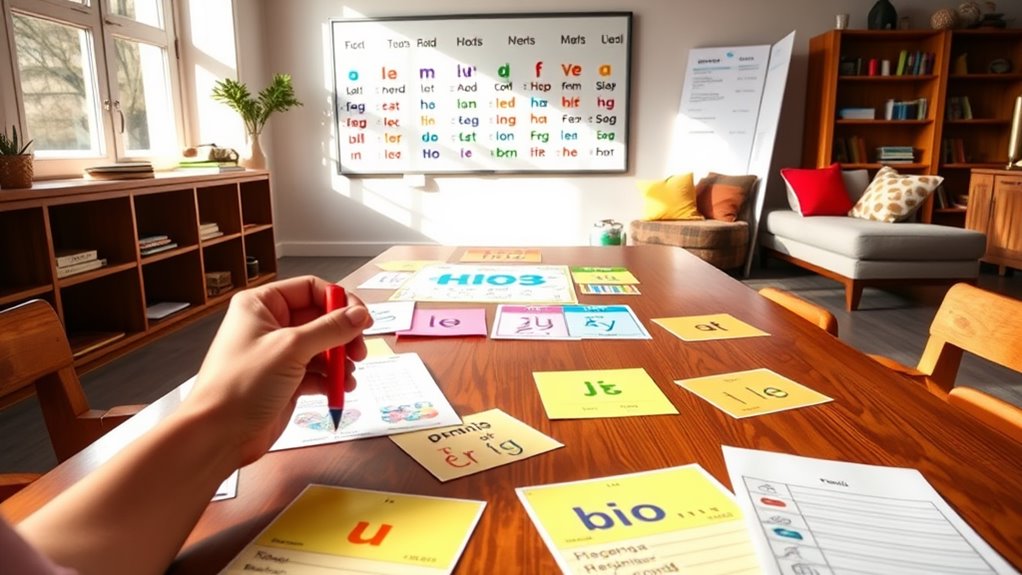
To enhance phonics skills among adult ESL learners, incorporating practical activities and worksheets can make a noticeable impact on their learning experience.
For instance, using the ESL Ph Words Phonics Search Worksheet allows you to identify the “ph” sound in words like “phone” and “photograph.”
Engaging in phonics games, such as the ESL Initial Sh Words Phonics Maze PPT Game, can also make practicing pronunciation fun.
Visual aids like Magic E Flashcards and Vowel CVC Flashcards support your understanding of phonics rules.
Additionally, reading tasks with resources like the ESL Mini-Reader: Phonics Level 2 help improve word recognition.
Finally, the Post-16 phonics toolkit offers valuable worksheets and activities tailored to adult learners’ needs.
Incorporating Technology in Phonics Learning
Incorporating technology in phonics learning opens up a world of opportunities for adult ESL learners, making the process both engaging and effective.
By leveraging various digital tools, you can enhance your phonics skills while enjoying the learning experience.
Here are some ways to integrate technology:
- Use interactive apps like ABCmouse and Phonics Genius for personalized practice.
- Explore Open Educational Resources on sites like Starfall and PBS Kids for free activities.
- Participate in phonics games to boost motivation and engagement.
- Access mobile apps such as Duolingo for on-the-go learning.
- Track your progress in real-time to stay motivated.
With technology, you can overcome learning barriers and build confidence in your reading and writing abilities.
Building Vocabulary Through Phonics

Building your vocabulary is essential for improving your English skills, and phonics can help you achieve that.
By practicing word families and focusing on common endings, you’ll not only expand your vocabulary but also boost your reading comprehension.
Let’s explore some effective techniques to grow your word bank through phonics!
Importance of Vocabulary Growth
Vocabulary growth is essential for adult ESL learners, and phonics plays a significant role in this process.
By mastering phonics, you can open up a world of vocabulary enhancement that boosts your communication skills.
- Decoding unfamiliar words becomes easier.
- You’ll grasp common prefixes, suffixes, and roots.
- Your reading comprehension skills will improve.
- You’ll experience significant vocabulary growth—20-30% on average!
- Engaging in phonics-based activities deepens your understanding of word structure.
Techniques for Vocabulary Expansion
While expanding your vocabulary can seem intimidating, using phonics techniques makes the process much more manageable and enjoyable.
By focusing on word families like -at, -an, and -in, you can quickly recognize patterns and decode unfamiliar words.
This approach can boost your vocabulary acquisition by up to 30%!
Tailor your phonics practice to include relevant vocabulary related to your work or interests to keep you engaged.
Try activities like word sorting, phonics scrambles, and word searches to reinforce what you learn.
Research shows that adults using phonics in vocabulary building often see significant gains in reading comprehension, sometimes increasing their skills by 1.5 grade levels in just 12 weeks.
The Role of Phonics in Reading Comprehension
Understanding phonics can substantially enhance your reading comprehension skills. By mastering phonics, you’ll release the ability to approach texts with confidence and clarity.
Here are some ways phonics plays a vital role in your reading and writing skills:
- Decoding words quickly and accurately
- Recognizing patterns in word formation
- Building vocabulary through phonetic understanding
- Enhancing fluency by connecting sounds to letters
- Improving retention of information while reading
When you grasp phonics, you’re not just reading words; you’re comprehending meaning. This foundation allows you to engage with texts more effectively, leading to better communication and expression in your writing. Embrace phonics, and watch your reading comprehension soar!
Assessing Phonics Skills in Adult Learners

Evaluating your phonics skills is an important step in your journey to becoming a more confident reader and writer. Evaluating these skills involves recognizing and manipulating sounds in words, as well as understanding sound-symbol relationships.
You can use various methods, such as standardized tests, informal observations, and instructor feedback, to gauge your progress. Tools like the Phonics Assessment Guide can help you evaluate vital skills, including phonemic awareness, decoding, and encoding. By identifying areas where you need additional support, you can focus your learning efforts effectively.
Regular evaluation not only tracks your progress but also helps inform instruction, ensuring you’re on the right path to achieving your reading and writing goals.
Resources for Phonics Instruction
As you set out on your phonics journey, leveraging the right resources can make all the difference in your learning experience.
Embarking on your phonics journey? Choosing the right resources can significantly enhance your learning experience.
Here are some excellent resources for phonics instruction tailored for ESL learners:
- Interactive Apps: Explore engaging phonics apps that make learning fun and interactive.
- Online Courses: Enroll in structured courses focusing on phonics fundamentals.
- Flashcards: Use colorful flashcards to reinforce letter-sound relationships.
- Phonics Workbooks: Invest in workbooks designed for adult learners to practice at your own pace.
- YouTube Tutorials: Watch instructional videos that break down phonics concepts visually.
Success Stories: Impact of Phonics on Adult Learners

When you plunge into phonics instruction, you’ll discover inspiring success stories that highlight its transformative impact on adult learners.
Studies show that phonics instruction can boost reading skills by 20-30%.
Programs like Pathway to Literacy boast a remarkable 90% success rate in helping adults achieve their reading goals.
Participants in the abcEnglish program experienced a significant leap in decoding skills, with 85% reading independently in just 30 days.
Additionally, 75% of literacy programs using phonics instruction report higher success rates than those that don’t.
Research from the Immigrant Welcome Center reveals that phonics instruction leads to a 40% higher progression rate to advanced English levels.
These successes show just how powerful phonics can be for adult learners.
Frequently Asked Questions
How to Teach Phonics Step by Step for Adults?
Imagine teaching a child to ride a bike; start with balance, then add pedaling. For phonics instruction, begin with sounds, use visuals, and gradually build confidence, helping adults connect letters and words effortlessly.
How Do You Teach Phonics in ESL?
To teach phonics in ESL effectively, you’ll focus on phonemic awareness and use multisensory activities. Incorporate authentic materials that resonate with learners, ensuring they connect with the language and develop essential reading skills.
Can You Teach Phonics to Adults?
Yes, you can teach phonics to adults! It enhances adult literacy by improving reading and writing skills. Tailor your approach to their needs, focusing on comprehension while using engaging materials that build their confidence.
What Are the Four Essential Stages for Instructing Phonics to ESL Learners?
To effectively teach phonics stages, start with sound-symbol correspondences, then introduce phonetic patterns, explore complex concepts like syllables, and finally apply skills in real-life tasks. This structured approach will enhance your learners’ reading and writing abilities.
In Brief
Phonics isn’t just for children; it’s an essential tool for adults as well. At Austen Instant Tapes Ltd, our team of adhesive and tape experts, boasting over 50 years of experience, understands the importance of clear communication. While navigating the complexities of language may seem daunting, mastering the sounds behind words can significantly enhance your reading skills and boost your confidence.
Imagine the difference between struggling with a text one moment and engaging with it effortlessly the next. By embracing phonics, you’re not just learning to read; you’re unlocking a world of new opportunities and experiences. With our onsite visits and partnerships as authorised distributors for tesa® Industry Partners, 3M Industrial Products, and Advance Tapes International among others, we are here to support your journey.
Keep practicing phonics, and witness how it can transform your world—just as we have transformed the adhesive industry in the UK, where fewer than 10 other companies share our specialist supplier approvals. Invest in your skills, and watch your confidence soar!